

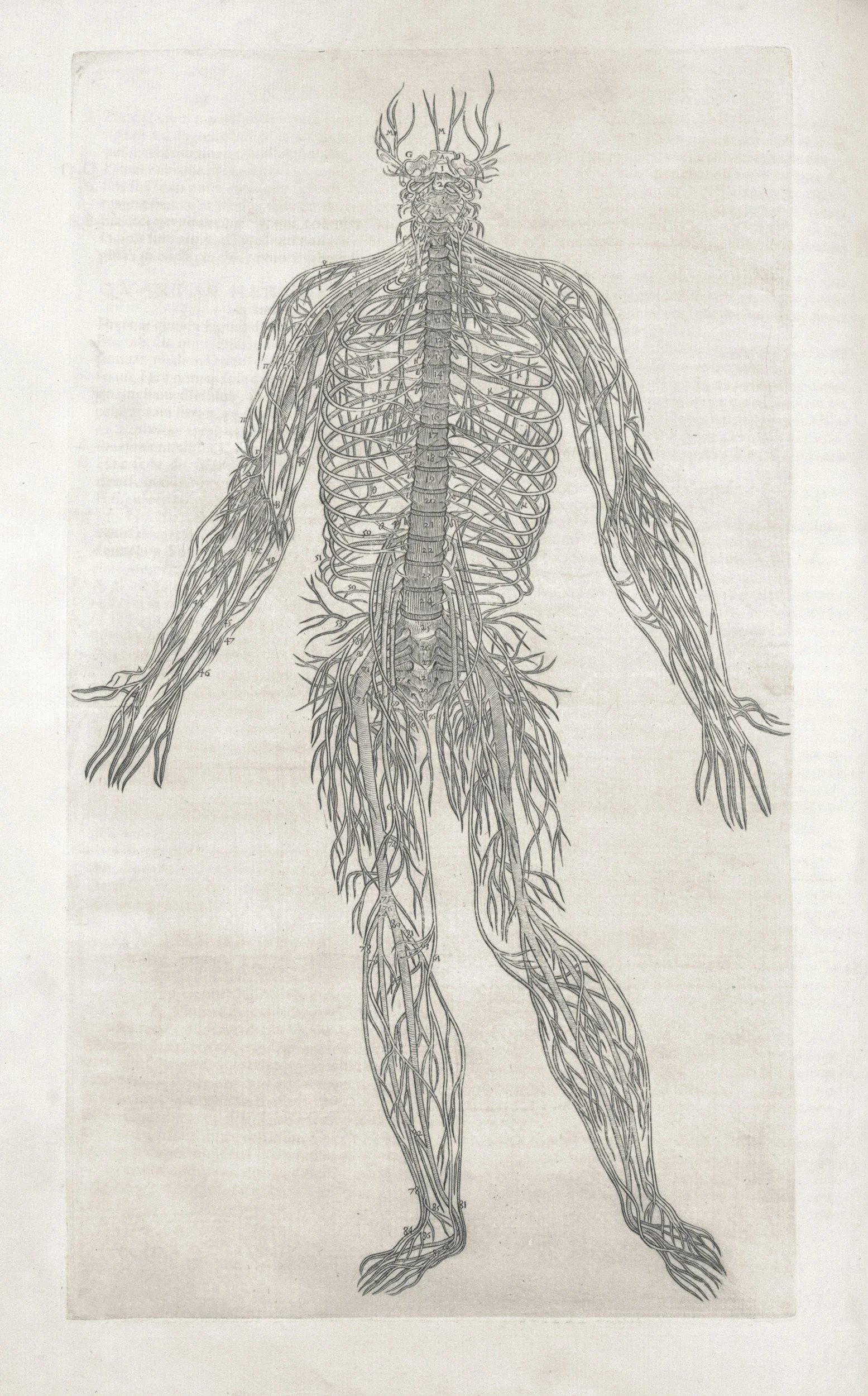
Trauma and the Body
To keep us going after trauma, the brain may essentially sever the connection between the consciousness and the physical body.

By Gregg Hansen
The mind’s effect on the body is fascinating. It’s likely you have experienced it to some degree, even if you weren’t aware of what it was or why. Depression, for example, causes physical body aches and soreness.
I remember experiencing this myself a few months after my separation. As a high school athlete and an active adult, I was no stranger to soreness, but this felt different. Biologically, depression and physical pain share the exact same neurological hardware and inflammatory pathways. The paper titled “Does Rejection Hurt?” by Naomi Eisenberger and Matthew Lieberman showed that social exclusion and acute emotional distress light up the exact same regions of the brain: the dorsal ACC and anterior insula.
Sometimes I woke up with a sore shoulder, but not the kind of soreness I was used to. It felt like my shoulder had run a marathon, even though I hadn’t done anything out of the ordinary. Other times, my back was so tired I would straighten it out like an older person standing up from a couch. Occasionally, it just felt like I had the flu without the cough, congestion, or fever. Eventually, this went away as my mood improved.
For many, this is the beginning and the end of how emotional pain affects their body. But for people with traumatic pasts, the effects can be startlingly severe and long-lasting.
Most of us have heard about the effects trauma can have on the physical body. But I don’t think people realize just how strong it can be, particularly regarding the profound disconnection it causes. I recently learned something particularly striking: the famous Dr. Kolk described testing his patients by asking them to close their eyes, placing an object in their hand, and asking them to identify it. These objects—like car keys, a can opener, or a coin—should have been easy for anyone to recognize.
“Healthy” individuals identified them immediately, but patients with developmental trauma disorder and severe PTSD frequently couldn’t tell what they were holding.
When prompted, the patients would calmly say things like, “I feel nothing,” or “It’s just there.” Even when specifically asked about the temperature or texture of the object, they would simply reply, “I don’t know, I don’t really feel anything.” Ironically, they seemed just as confused as the healthy patients as to why they were being asked the question. When pressed further, they would guess random, incorrect objects, or just give up.
Now, really imagine that. Imagine being so disconnected from your own body that you can’t even tell a coin is sitting in your hand.
This is believed to be a survival mechanism for those who have suffered chronic trauma or emotional agony. To keep the person going, the brain essentially severs the connection between consciousness and the physical body.
Imagine getting a call from an unknown number, and the caller states, “Ma’am, your husband has been in a car accident.” Cortisol spikes, your muscles tense, and it feels like a softball covered in razor blades is rolling around in your stomach until you get more information—and probably for a while after.
Somatic tools teach the nervous system it is safe to come out of hiding.
When that kind of pain doesn’t stop, the brain essentially decides to pull the plug on the connection. Otherwise, the conscious mind simply couldn’t take it. Scientifically, this is known as dorsal vagal shutdown.
A tragic side effect of this survival mechanism is that everything goes silent. The emotional pain becomes survivable, but you are so disconnected that you can’t tell a quarter has been placed in your hand. Some might describe it as “feeling dead inside.” Modern science has finally allowed us to bridge the gap between that feeling and the actual parts of the brain that shut down.
Dr. Ruth Lanius put chronically traumatized patients into fMRI scanners—a clinical experiment detailed in The Body Keeps the Score. The part of the brain responsible for mapping a person’s internal sensations—like heart rate, breathing, and gut feelings—is called the insula. The insula works with the anterior cingulate cortex, which links physical sensations to emotion to help you register distress, comfort, or pain. Meanwhile, the parietal cortex maps external touch, balance, spatial orientation, and physical boundaries. In healthy individuals, these regions work together and form a “strip” on the scanner that lights up with activity. Even in a state of rest, they glow. In the trauma patients, however, this strip was completely dark, showing no blood flow or metabolic activity.
I wonder how many people throughout history described themselves as feeling dead inside, only for everyone around them to assume it was just a dramatic way to express emotional distress. Yet, the parts of their brain responsible for feeling physically alive were literally shut down.
It turns out an ancient turn of phrase had the biology figured out long before fMRI scans existed. For generations, when people enduring profound grief or chronic stress said they “felt numb” or “felt dead inside,” we chalked it up to emotional exaggeration. We treated it like poetry. But the science shows they weren’t being dramatic—they were offering an exact readout of their physical reality. Their brains had literally powered down the machinery that registers what it feels like to be alive.
But that numbness is only half of the story. While some people’s bodies respond to overwhelming stress by cutting the sensory feed and freezing, others experience the volume cranked to maximum: crushing body aches, runaway inflammation, and muscles locked in a permanent defensive guard. This is part one of an ongoing series on how stress and trauma physically remodel the human animal. Over the next few issues, we’re going to map out the different ways the body archives these experiences—from chronic pain and immune flares to the numbness of dissociation—and look at the emerging treatments and somatic tools that actually teach the nervous system it’s safe to come out of hiding.